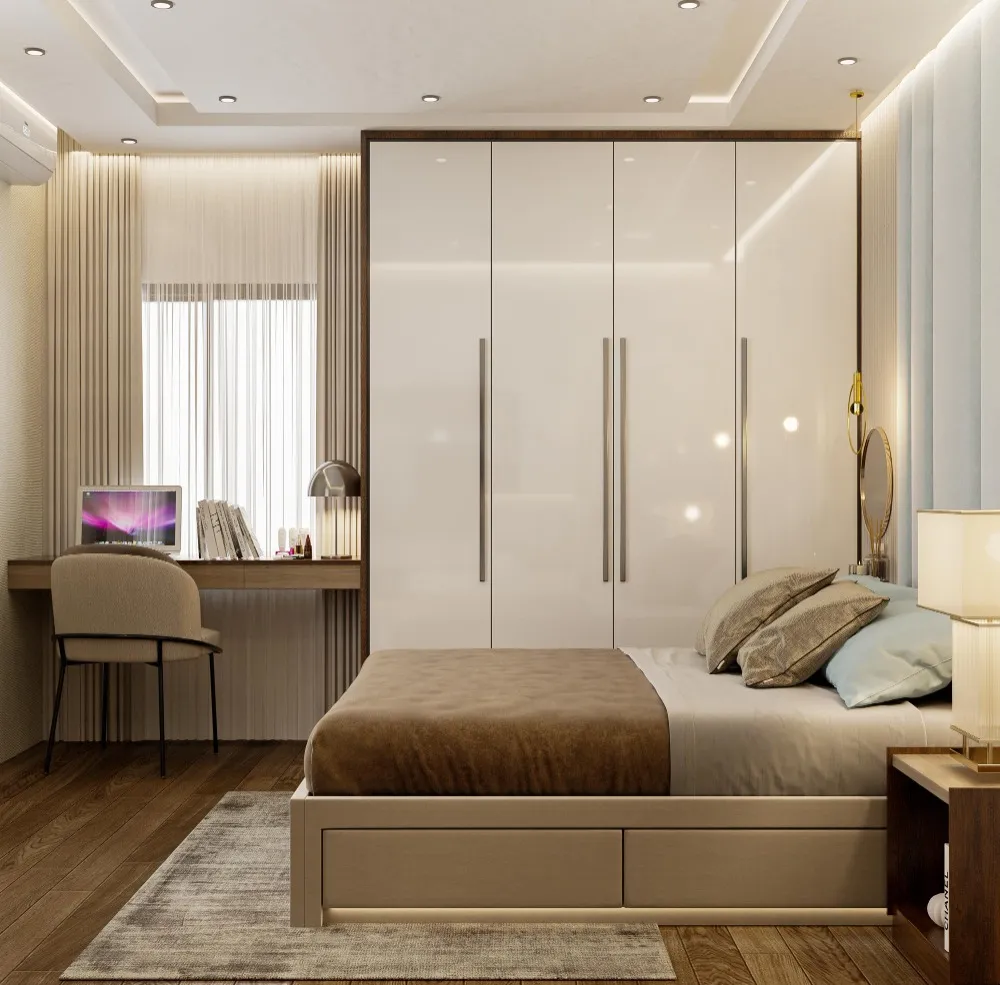
A wardrobe occupies a significant portion of the bedroom, so its design affects both storage capacity and the overall sense of space. Modern wardrobe designs focus on organized interiors, clean external finishes, and practical access rather than simply providing one large compartment for clothes.
In Coimbatore homes, wardrobe planning may need to accommodate everyday clothing, occasion wear, accessories, bedding, luggage, and seasonal items. A thoughtful internal arrangement can reduce clutter without making the bedroom feel dominated by cabinetry.
Begin with a Storage Inventory
Before deciding on shutter colours or handle styles, list what the wardrobe must hold. This helps determine the correct mix of hanging space, shelves, drawers, and upper storage.
Useful categories include:
- Shirts, trousers, dresses, and sarees
- Folded daily clothing
- Jewellery and personal accessories
- Footwear
- Bags
- Bed linen
- Travel luggage
- Documents or valuables
The wardrobe should reflect actual quantities. Someone with more folded clothing may benefit from additional shelves, while a user with formal wear may need longer hanging sections.
Choose the Right Door System
Hinged wardrobes provide full access to the interior and allow accessories such as mirrors or hooks to be attached to the inner shutters. They work best when sufficient clearance is available in front.
Sliding wardrobes save door-opening space and create an uninterrupted external surface. They are suitable for compact bedrooms, although one section remains partially covered when another is open.
Folding or sliding-folding shutters can provide wider access but involve more complex hardware. The decision should consider room size, usage frequency, maintenance, and budget.
Divide the Interior into Functional Zones
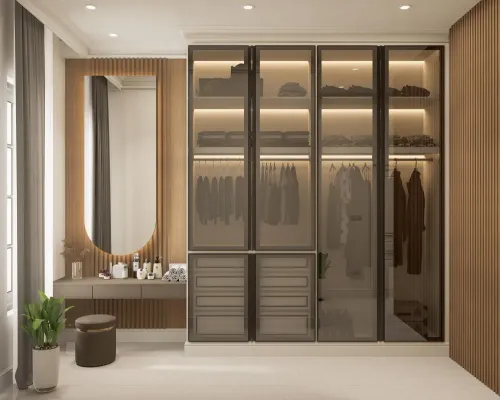
A smart wardrobe generally has three vertical zones. The middle area, between the waist and eye level, should hold frequently used clothing. Lower sections can accommodate drawers, shoes, or less frequently accessed items. Upper lofts are suitable for luggage and seasonal belongings.
Common internal features include:
- Adjustable shelves
- Soft-close drawers
- Trouser pull-outs
- Saree racks
- Accessory trays
- Belt and tie holders
- Laundry baskets
- Lockable drawers
- Sensor lighting
Accessories should be added only when they genuinely improve use. A simple shelf can sometimes offer more flexibility than a specialized fitting.
Use Mirrors Strategically
Mirrored shutters can make a bedroom appear larger and reduce the need for a separate dressing mirror. However, placing mirrors across every shutter may create excessive reflection.
A single mirrored panel, tinted mirror, or integrated dressing niche can provide a balanced solution. The mirror position should allow comfortable use without being obstructed by the bed or another furniture item.
Coordinate the Wardrobe with the Room
Modern wardrobe designs often use neutral colours, wood-grain accents, fluted panels, glass sections, or subtle metallic profiles. The finish should coordinate with the bed, wall colour, flooring, and curtains.
For small rooms, lighter colours and minimal handle profiles can reduce visual weight. Larger bedrooms can accommodate deeper tones or contrasting panels. The design should remain restrained enough to age well.
Include Ventilation and Maintenance Access
Clothing storage requires protection from moisture and dust. The wardrobe should be installed against a dry, properly finished wall. If a wall has a history of seepage, the source should be resolved before installation.
Small ventilation provisions may be considered where appropriate. Internal surfaces should be easy to wipe, and skirting details should prevent dust from collecting in inaccessible gaps.
Check Measurements Before Finalization
Bedroom dimensions alone are not enough. The design should account for switchboards, windows, air-conditioner placement, curtains, door movement, and walking clearance around the bed.
Apartment and villa owners in Tamil Nadu may also need loft storage for suitcases or less frequently used household items. Extending the wardrobe to the ceiling can avoid an exposed dust-catching ledge while providing additional capacity.
A modern wardrobe becomes “smart” through planning, not decoration. When every shelf, hanging section, and drawer has a defined purpose, the bedroom remains easier to organize and more comfortable to use.
Keywords